

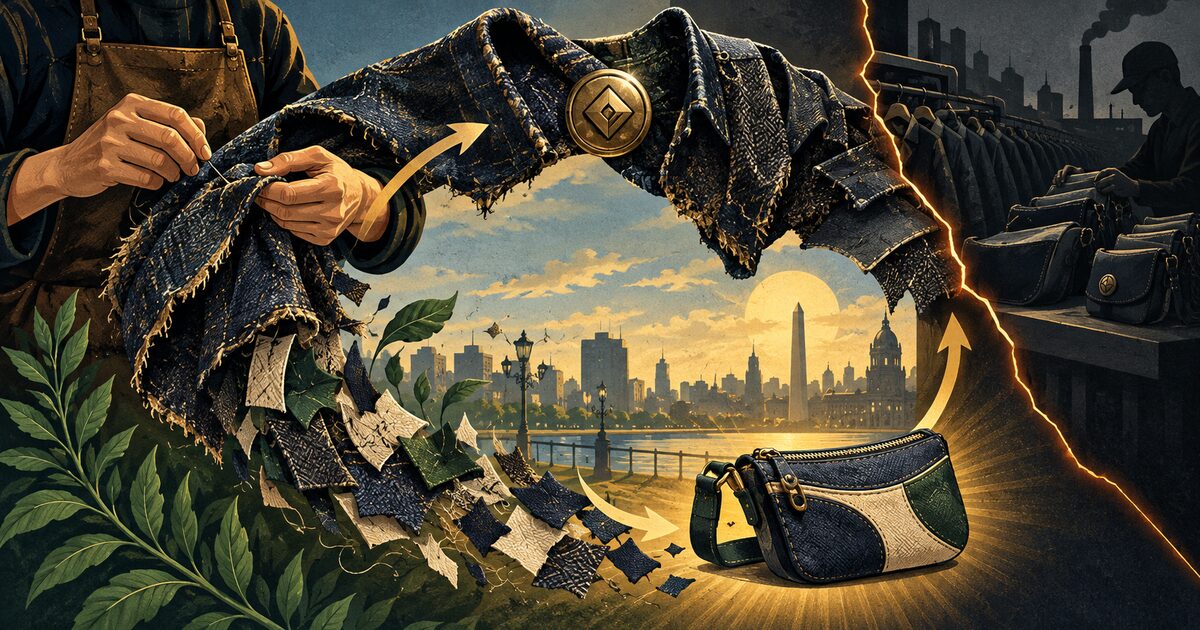
You may resell an authentic second-hand product. Turning its protected artwork, design or branded parts into a new commercial product is a different matter.
Upcycling is not automatically lawful merely because it is sustainable. Reselling the same genuine item is generally protected by the exhaustion or first-sale principle. But reproducing protected artwork, materially altering a branded product or using another company’s logo as the selling point of a new item may require permission. The answer depends on what you bought, what you changed and how you market the result.
Key point: buying a garment, piece of furniture or accessory gives you ownership of the physical object. It does not automatically transfer the copyright, trademark or design rights incorporated into that object.
A circular economy does not eliminate intellectual property rights
The circular economy seeks to extend the useful life of products, reduce waste and limit the unnecessary use of new raw materials. Its practices include repair, resale, recycling and upcycling: transforming an existing object or material into something with a new or higher use or value.
Those activities may share an environmental purpose, but they are not legally identical. Selling an unchanged second-hand jacket is different from cutting out its printed artwork to make handbags, removing branded buttons to produce jewelry or copying its pattern across a new collection.
The dividing line is often between circulating the same lawful copy and commercially exploiting the intellectual elements embodied in it again. Copyright, trademark and industrial design rights may all become relevant when the project involves reproduction, adaptation, substantial alteration or use of another brand’s reputation.
Exhaustion: why you can advertise and resell a used product
If you lawfully purchased a genuine product that the trademark owner—or someone acting with its consent—placed on the market, you may generally resell that same item without asking the manufacturer for fresh permission. This is the exhaustion of rights, also known as the first-sale doctrine: the owner has already exercised its right to market that particular unit and cannot control every later transfer indefinitely.
The World Intellectual Property Organization explains that exhaustion allows genuine goods to circulate after their first sale. That principle supports legitimate markets for used books, clothing, phones, furniture, vehicles and collectibles. It covers resale, lending or transfer of that copy; it does not grant a license to manufacture duplicates or attach the trademark to newly made goods.
You may also advertise the product and refer to its brand when that reference truthfully identifies what you are selling. A listing may state “used genuine X-brand jacket” and display your own photographs of that jacket. In that context the mark identifies the genuine item’s origin; it does not identify you as the manufacturer or an authorized dealer.
A careful listing should disclose the item’s real condition, use photographs you own or are allowed to use, avoid suggesting official affiliation and make any significant repair or alteration clear. Exhaustion does not authorize counterfeit sales, and it does not give you permission to copy the manufacturer’s advertising photographs.
Generally permitted: selling the same genuine item, naming the brand to identify it, showing the logo already attached to the product and publishing your own photographs of the item.
Not covered by exhaustion: reproducing protected artwork or designs, making additional units, removing a logo and placing it on another product, concealing material alterations or presenting yourself as officially connected with the brand.
What copyright protects in a reused product
Argentina’s Copyright Act 11,723 protects drawings, photographs, sculptures, engravings, models and works of art applied to commerce or industry, among other creations. It also gives the copyright owner the power to reproduce, adapt, modify and authorize uses of the work.
This protection may cover an illustration printed on a shirt, a photograph reproduced on a bag, an original embroidered work, a sculptural feature incorporated into an object or a sufficiently original artistic design. Copyright does not protect the abstract idea of “making a bag from recovered fabric”; it protects the particular expression created by someone else.
Ownership of the material object is not the same as ownership of copyright. Section 54 of Act 11,723 states that the sale of a painting, sculpture, photograph or analogous work does not, unless otherwise agreed, include the reproduction right. You may own a painting and still lack permission to print its image on one hundred shirts.
Copyright risk increases when an upcycling business copies a work to manufacture additional units, isolates a protected image and makes it the focus of a different product, creates an unauthorized adaptation or builds a commercial collection around that expression. Argentine law does not contain a general exception authorizing commercial transformation simply because the activity reduces waste.
The Chanel case: an authentic button did not make the new product authorized
The tension became visible in Chanel SAS v. Kamad Reworked, decided by the Paris Judicial Court. Kamad produced necklaces, bracelets, earrings and belt chains from genuine buttons and buckles bearing the “COCO” and “CHANEL” marks and Chanel’s interlocking-letter emblem.
According to the legal report on the decision, Kamad described each item as its own independent creation and told customers that it was not affiliated with Chanel. It also supplied certificates stating that the components came from authentic articles.
Those disclaimers were not enough. The court found that the original products had been modified and that consumers could immediately associate the new accessories with Chanel. Kamad’s own sign appeared in less visible places while the luxury marks dominated the front. Small-print disclosures did not remove that commercial link.
The decision rested mainly on trademark infringement and misleading commercial practices, not copyright. That distinction matters: an upcycling project may avoid copying a copyright work and still infringe a trademark by using the sign as the feature that attracts customers or suggests a collaboration that does not exist.
Resale, repair and transformation are different transactions
Resale generally preserves the original product. A person sells the genuine garment or accessory that they purchased, and the mark truthfully identifies the source of that same item. The seller must still avoid false claims about authenticity, condition, warranty or affiliation.
Repair seeks to restore the object’s functionality. Replacing a broken zipper or restoring a piece of furniture is usually closer to preserving the product than creating a new one. The analysis changes if the work alters a protected creation, replaces distinctive elements or is advertised as an official service when it is not.
Commercial transformation takes parts of the original object and incorporates them into something different. The business is no longer offering only the unit that entered the market: it is offering a new product, a new presentation and often a new commercial use of the original logo, artwork or design.
European law illustrates the distinction. A first authorized sale may exhaust control over resale of that copy, but it does not automatically authorize reproduction or remove legitimate reasons to oppose commercialization of an altered product. Directive 2001/29 expressly separates the reproduction right from the distribution right that may be exhausted after the first sale.
Copyright, trademarks and designs may overlap
A single product may contain several layers of protection. Copyright may protect the illustration; Argentina’s Trademark Act 22,362 may protect the name and logo; and industrial design law may protect a novel product appearance.
Those layers operate independently. A shape that does not qualify for copyright protection may still be covered by a registered industrial design. Likewise, the fact that recovered material is genuine does not allow the upcycler to present a transformed item as though it came from the trademark owner.
Design protection is not permanent or automatic in every system. The European dispute over the invalidation of the Crocs design (in Spanish) shows why a business should identify the specific right, its owner and its current status before building a collection around someone else’s products.
A practical example in Argentina
Imagine a business in Córdoba that buys used garments, cuts out areas containing original illustrations and places them on the front of newly manufactured backpacks. Each backpack also carries the upcycler’s own label and states that there is no connection with the garment brand.
The label helps identify the new manufacturer, but it does not settle every issue. The business would need to determine whether the illustration is protected, whether the transformation is an unauthorized adaptation or exploitation, whether another company’s trademark remains visible, whether that mark drives the sale and whether the overall marketing creates confusion. It should also document the lawful origin of the materials and secure appropriate rights from the designers of the new products.
If the business instead uses unbranded plain textiles, creates original patterns and keeps purchase records, its risk is considerably lower. Sustainable design works best when legal design is built into the product from the beginning.
How to reduce legal risk in an upcycling project
1. Map each asset: distinguish the physical object from its artwork, trademark, industrial design and promotional photographs.
2. Define the intervention: repair, resale, cutting, reproduction, printing and serial manufacture do not have the same legal effect.
3. Check licenses and permissions: if the new product’s value depends on someone else’s work or sign, an express license may be necessary.
4. Do not rely on a disclaimer alone: “not affiliated” does not cure infringement or an overall presentation that remains confusing.
5. Make your own identity prominent: your branding should clearly identify the new product’s source without trading on another company’s reputation.
6. Protect the new work: document authorship, assignments and original designs. If you use open licenses, review their conditions; as our analysis of SCP and derivative works explains, “open” does not mean free of obligations.
Frequently asked questions
Can I list and sell a used branded item? Yes, in general, when you are reselling the same genuine item you acquired lawfully. Describe it accurately, use your own photographs and do not imply official affiliation.
Can I show the brand and logo in the listing? Yes, when they identify the genuine item being sold. That descriptive use does not permit you to attach the mark to a newly made product or use it as your own business identity.
Does a “not affiliated” disclaimer solve the problem? Not by itself. Courts examine the entire presentation: the prominence of each mark, photographs, price, sales channel, alterations and the likely perception of customers.
Is there a sustainability exception for commercial upcycling? Argentine intellectual property law does not provide a general exception for commercial upcycling. Each project must be assessed according to the rights involved and the transformation performed.
Are you reselling or transforming branded products?
We can review the copyright, trademark, design and licensing issues before you launch the collection or list the products.
Tell us about your project
Send your basic contact details and a short description of the product, source materials and intended transformation. We will contact you to review the project.
Herrera & Flamenco Abogados · Córdoba, Argentina