

A guide to protecting the appearance of your products: requirements, ownership, INPI registration and options when copies appear.
In Argentina, registering an industrial model or design protects the new ornamental appearance of an industrial or handicraft product: its shape or the appearance applied to it. Registration provides a way to prevent unauthorised commercial reproduction or imitation and can be relevant to furniture, packaging, clothing, lighting and many other products. Applications are filed with INPI, Argentina’s National Institute of Industrial Property, and protection lasts five years, renewable up to a maximum of fifteen. Enforcement requires a valid registration, evidence of ownership and proof of which protected features the disputed product reproduces.
Key point. Industrial design protection concerns how a product looks. A trademark identifies its commercial origin, while a patent protects a technical invention. Registering one does not replace the others or establish that the product can be marketed without checking third-party rights.
What is an industrial design, and what is it used for?
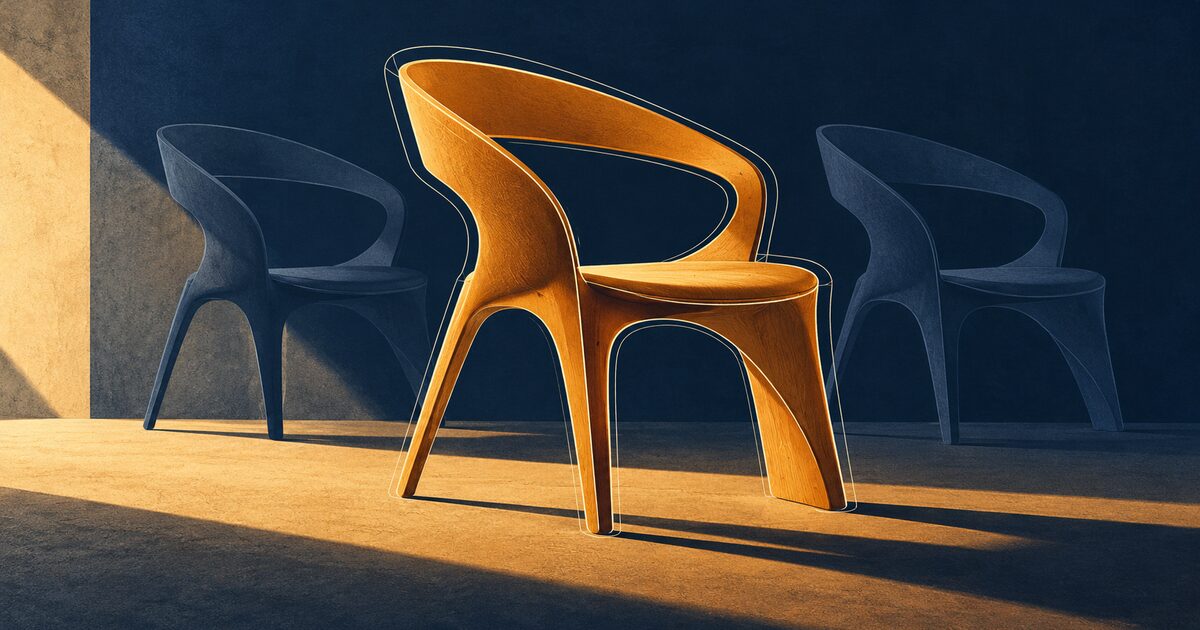
A chair may serve the same purpose as hundreds of others yet have a distinctive silhouette. A container may attract attention through its curves; a fabric, through its pattern. That appearance may account for an important part of a product’s commercial value, even if it does not improve how the product works.
Decree-Law 6673/63, as currently amended, establishes Argentina’s legal framework. Registration allows the owner to exploit and transfer the design and take action against unauthorised exploitation. It can also support a manufacturing licence: the agreement should specify who may use the design, on what terms, for how long and subject to which controls.
Protection is not reserved for large manufacturers. It may matter to a handicraft business, a design studio or an SME. Nor does it protect an abstract idea, such as “making folding furniture”: the application concerns a specific appearance, identified through images.
Industrial models and industrial designs: what can be registered?
INPI distinguishes between industrial models, which concern three-dimensional aspects, and industrial designs, which concern two-dimensional aspects. Both fall within the same Argentine framework. In everyday usage, “industrial design” often refers to both.
Three-dimensional shapes: for example, the ornamental configuration of a lamp, chair, container or piece of jewellery. Two-dimensional aspects: for example, a drawing or ornamentation applied to fabric or to a product’s surface. These are examples to assess; whether a particular design can be registered depends on the proposal and the existing designs.
The manufacturing technique does not determine protection. A 3D-printed item can have a registrable appearance, just like one made using other methods. Our article on protecting items created through 3D printing (in Spanish) explores that specific application.
What is excluded, and what does it mean for a design to be new?
Article 6 excludes, among other cases, designs without a distinct configuration and their own novel appearance compared with earlier designs; features dictated by the product’s technical function; mere colour changes to known designs; and designs contrary to morality, accepted standards of behaviour or public order.
Changing the colour of a known chair is therefore insufficient to claim exclusive rights over its shape. This registration should not be used to monopolise a solution whose configuration is dictated by its technical function. If you have developed a mechanism or functional improvement, the patent or utility model framework and its specific requirements need to be assessed.
Novelty is not limited to what you knew about or what was registered in Argentina. Earlier publication or public exploitation matters, including abroad. Searches should cover registers, catalogues, shops, websites and other sources of earlier designs. Finding a similar object calls for comparison; a search that finds nothing does not, on its own, guarantee a valid registration.
Should you register before showing the product online or selling it?
Yes: the safest approach is to file before disclosure. An Instagram post, online shop, trade fair or pre-sale campaign may make a design public. Waiting to see whether it sells well can jeopardise protection.
Argentine law provides an exception for certain disclosures within the six months preceding the application or priority date: disclosures resulting directly or indirectly from acts of the creator or their lawful successors; certain unlawful acts by third parties against them; and erroneous or improper publication of applications by the relevant INPI Directorate. The exception is not limited to trade fair displays.
This is not a general invitation to publish first and deal with registration later. If you have already shown the product, the dates, content and origin of the disclosure must be reconstructed to check whether the exception applies. Preserve the original posts, catalogues and records. Other countries may also have different rules: Argentina’s exception does not guarantee international protection.
Who should own the registration if someone else created the design?
The starting point is the creator and their lawful successors. Individuals and legal entities may own rights, but they must be able to explain how they acquired them. Paying for design work or receiving the final file does not, by itself, resolve all the documentation needed to establish ownership and exploitation rights.
Article 1 contains specific rules for employee-created designs. It recognises rights in the creator, with exceptions where the employee was specifically hired to create those designs or merely carried out instructions. If the design was created jointly by employer and employee, it belongs to both unless agreed otherwise. Joint creators also need to organise their rights.
Where an independent designer, agency, business partners or manufacturers are involved, review contracts, assignments and authorisations before filing. If the registration is transferred, Article 15 requires the transfer to be recorded with INPI before the acquirer can invoke rights arising from it. The importance of documenting that chain also appears in our analysis of trademarks, copyright and designs in the Entain case.
How to register an industrial model or design with INPI
First, define the subject matter and investigate earlier designs. Identify the appearance you want to protect, who will own the rights, whether there are variants and whether disclosure has already occurred. These issues should be discussed before the application is filed.
Second, prepare clear and consistent representations. Article 10 requires drawings, photographs or digital reproductions that sufficiently identify the subject matter. A description is optional. Images matter because they define visually what has been submitted: backgrounds, perspectives, details and consistency between views deserve careful review.
Third, complete the electronic application and pay the official fee. INPI’s official guide to a single-design application (in Spanish) explains access using an Argentine tax credential, entering the details and figures, electronic signature and payment. For three-dimensional models, it specifies a first figure in perspective and permits additional views under its requirements.
Fourth, address any objections and retain the certificate. Keep the application, filed images, payment records and ownership documents as well. INPI states a processing time of three working days from confirmation of payment for a single-design application. That is the service’s stated timeframe, not a promise for every application, and it does not include preparing the filing properly.
One application may include up to twenty models or designs if they are applied to or incorporated in products within the same Locarno class. This differs from the Nice Classification used for trademarks. Including one variant does not automatically protect all the others. When filing, the applicant may also request deferral of publication of the grant for up to six months from registration.
The certificate does not guarantee that the design is valid
Argentina’s registration system involves a formal examination, without substantive examination of novelty. INPI explains in its frequently asked questions on models and designs (in Spanish) that it does not check existing registrations to decide whether the design is new. The presumption favouring the first registrant can be rebutted.
Obtaining a certificate therefore does not make a known product new or cure defective ownership. Article 17 provides for judicial cancellation where registration was obtained by someone who was not the creator or in breach of the framework. Disputes fall within the jurisdiction of the federal courts. Before bringing a claim, weaknesses in your own registration must also be reviewed.
How long does protection last, how is it renewed, and what does it cost?
Protection lasts five years from filing and can be extended for two consecutive periods of the same length: fifteen years in total. It cannot be renewed indefinitely. Renewal must be requested during the final six months of the term; the law also permits filing within six months after expiry, subject to the applicable fee. The practical approach is to diarise renewal before expiry.
A quotation should distinguish official fees, preparation of images, review of earlier designs and professional fees. Multiple-design applications, renewals or additional procedures may change the cost. To keep this guide useful, we avoid stating a figure that will become outdated: check the current official procedures and fees (in Spanish) when filing.
Where does the registration apply, and what if you want to export?
An Argentine registration provides territorial protection in Argentina. It does not grant worldwide rights or automatically extend protection to every country where you sell. If you plan to export, manufacture abroad or present the product internationally, the strategy should be organised before disclosure.
The Paris Convention allows priority to be claimed in other participating countries within six months of the first filing, subject to the applicable requirements. Priority does not mean automatic registration: the relevant applications still need to be filed. Nor should that six-month period from filing be confused with Argentina’s prior-disclosure exception: they are different rules with different starting dates.
How can you enforce an industrial design if someone copies it?
1. Preserve evidence. Keep links, dates, listings, seller details, invoices and, where appropriate, a sample of the product. If online content may disappear, consider an appropriate method of formally recording it. Individual screenshots can be useful, but their evidential weight depends on the context and how they were obtained and preserved.
2. Review the registration and compare the products. Check ownership, the remaining term of protection, the filed images and earlier designs. Then identify which protected features the other product reproduces or imitates. There is no general legal rule that “changing 20%” avoids infringement; nor does every resemblance establish a successful claim. Expert evidence may be necessary.
3. Choose a proportionate response. Depending on the case, this may involve demanding that the use stop, negotiating a licence or settlement, or using a platform’s reporting procedure. Removal of a listing is not equivalent to a court finding of infringement and does not guarantee compensation.
4. Assess court action and urgency. Articles 19 and 20 provide for cessation of unauthorised exploitation and compensation for damage. Articles 24 and 25 regulate specific evidence-gathering measures and security requirements, as well as possible suspension of exploitation and seizure of products under their conditions. Judicial involvement and evidence are required: a certificate does not, by itself, trigger an immediate block.
The law also provides a criminal route for specified conduct, subject to its own requirements; not every disagreement over similarity automatically amounts to a criminal offence. Article 23 requires the registration certificate to accompany claims under this framework. Damages, time limits and available measures must be assessed against the chosen action and the facts: a criminal limitation period should not simply be applied to a civil claim.
What if you did not register, or also have trademark and copyright protection?
Without registration, you cannot assume you have the specific protection provided by Decree-Law 6673/63: Article 4 requires registration. Nevertheless, it is worth checking whether filing is still possible and whether other rights or breaches are involved. A confidentiality agreement, assignment, trademark or original copyright work may raise different issues. None automatically replaces a lost opportunity to register.
A single product may involve several forms of protection: ornamental appearance, a distinctive sign, a technical solution and potentially a copyright work. Each has its own requirements. In addition, Article 28 prevents the industrial design framework and Copyright Law 11,723 from being invoked simultaneously in judicial enforcement of rights over the same model or design where both deposits have been made. The strategy requires selecting and substantiating the appropriate legal routes.
An example: a chair designed for a business in Córdoba
Imagine an SME commissions a chair with a novel silhouette. Before launch, it documents its rights with the designer, investigates earlier designs and files consistent images of the model. The product line’s commercial name is assessed separately as a trademark. Any folding mechanism requires a separate technical analysis.
Months later, a chair appears with a different name and colour but with ornamental features that may reproduce the filed model. Changing the name does not rule out a design claim. The business must compare the appearances and review its registration; it cannot prohibit all folding chairs either. Its rights extend to the legally protected subject matter, not the entire product category.
At Herrera & Flamenco Abogados, we assist with assessing, registering and enforcing rights in creations from our base in Córdoba, Argentina. Our intellectual property services for designers and businesses help organise protection alongside ownership and contracts, before launch or when a dispute arises.
Frequently asked questions
Do I need an invention to register an industrial design? A technical invention is not required. The assessment concerns an ornamental appearance that meets the legal requirements of novelty and a distinct configuration. A functional improvement calls for examination under a different framework.
Can I register a product I have already posted on Instagram? The timing, content and source of the post must be reviewed. The law provides for certain disclosures within the six months before the application or priority date, but the exception has conditions and does not guarantee protection in other countries.
If I have registered the trademark, is the shape protected too? Not necessarily. Trademarks and industrial models or designs protect different aspects. The scope of each registration needs to be checked separately.
Will INPI stop copies as soon as I show my certificate? Not automatically. The certificate is a tool for enforcement; cessation, compensation and court measures require the relevant legal conditions and evidence. Validity, ownership, the remaining term and the scope of the registration should be reviewed first.
Want to protect your product’s design?
We assess your product’s appearance, earlier designs and ownership to plan registration or review a dispute involving copies.
Tell us which design you want to protect or review
Leave your basic contact details and a brief description. Please do not send design files or confidential information in this initial enquiry.
Herrera & Flamenco Abogados · Córdoba, Argentina